Research
I want to understand how a nervous system reorganizes itself when an animal learns, and to build computational tools that help design specific experiments for a tight theory–experiment loop.
My work runs at three scales that share one question: how does a biological network change what it does without losing what it already did? Today that means whole-brain imaging and dynamical-systems models of learning in C. elegans, and CeDNe, a framework that puts the worm's wiring, cell identities and activity into one model. During my PhD, I investigated this question at the level of the hippocampal microcircuit and a single bit of memory stored at a synapse.
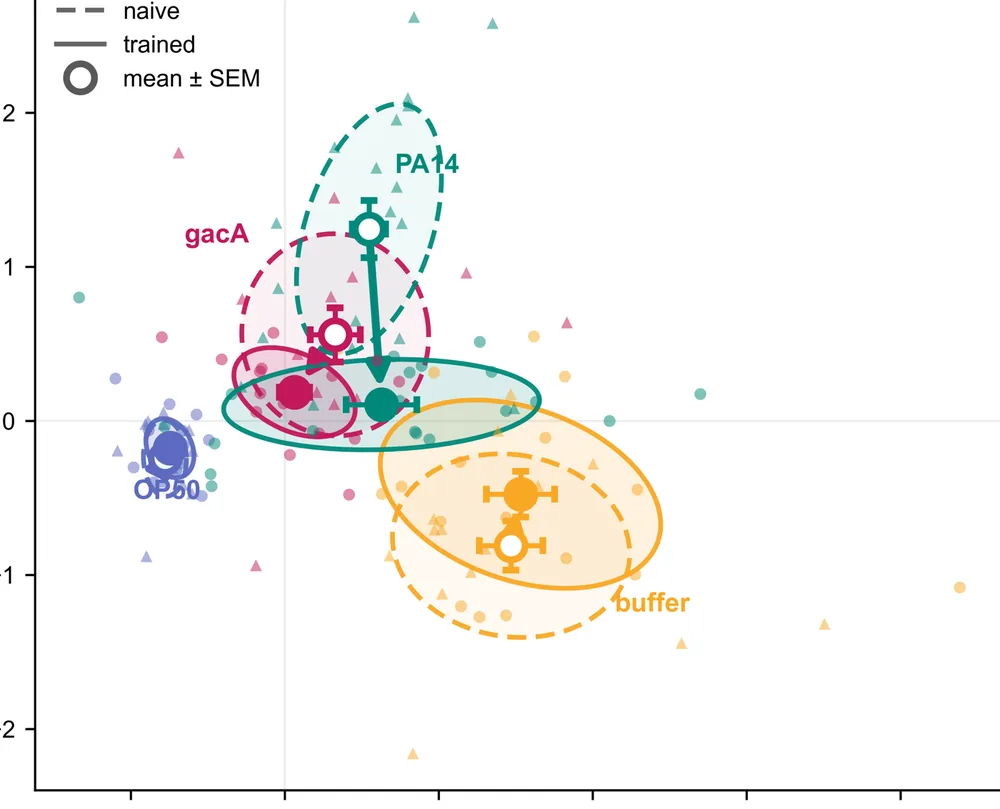
2022–present · Zhang Lab, Harvard
Whole-brain dynamics of learning
With brain-wide imaging of C. elegans before and after aversive learning, we ask how an entire nervous system reorganizes. I co-lead the project and lead its computational analysis and modeling. Preprint out; full write-up coming soon.
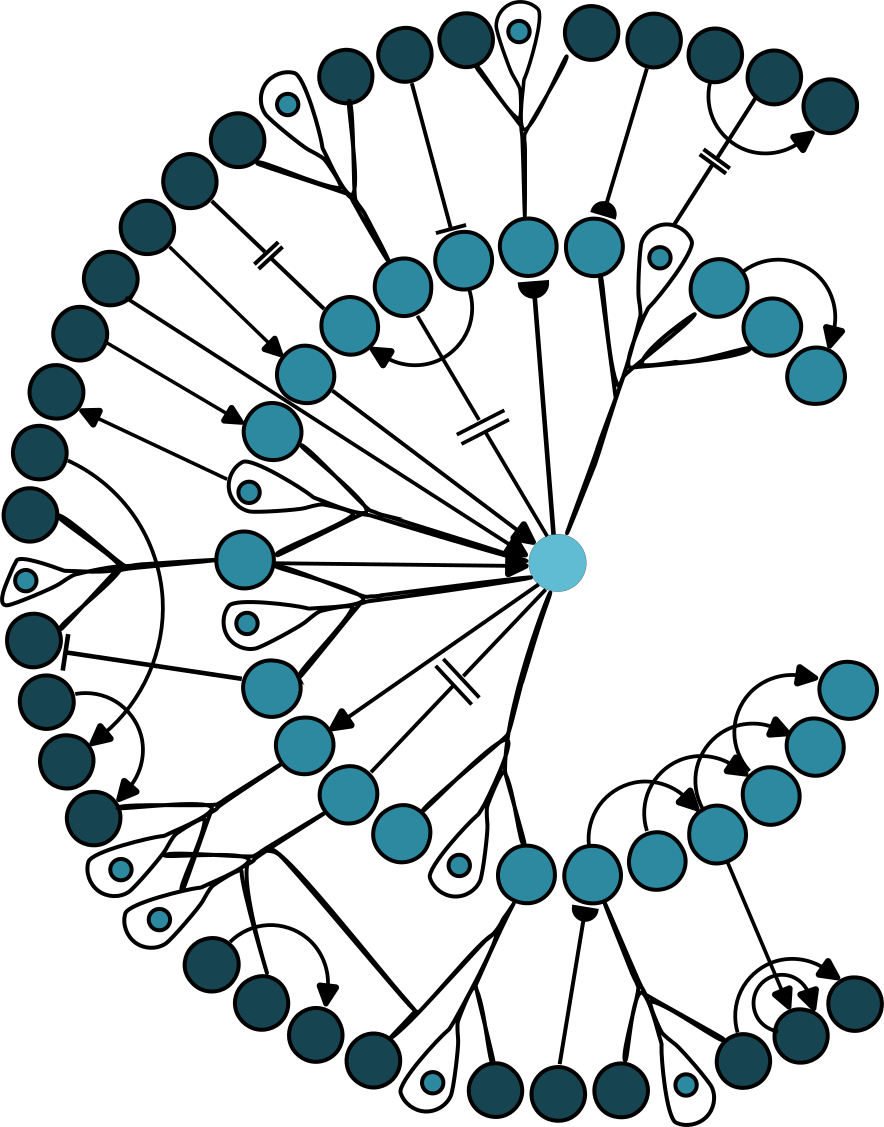
2024–present · open source
CeDNe: a graph model of the C. elegans nervous system
Connectome-embedded Dynamical Networks. Eighteen datasets, from the 1986 wiring diagram to single-cell transcriptomes, neuropeptide maps and whole-brain imaging, in one graph you can query, simulate and fit.
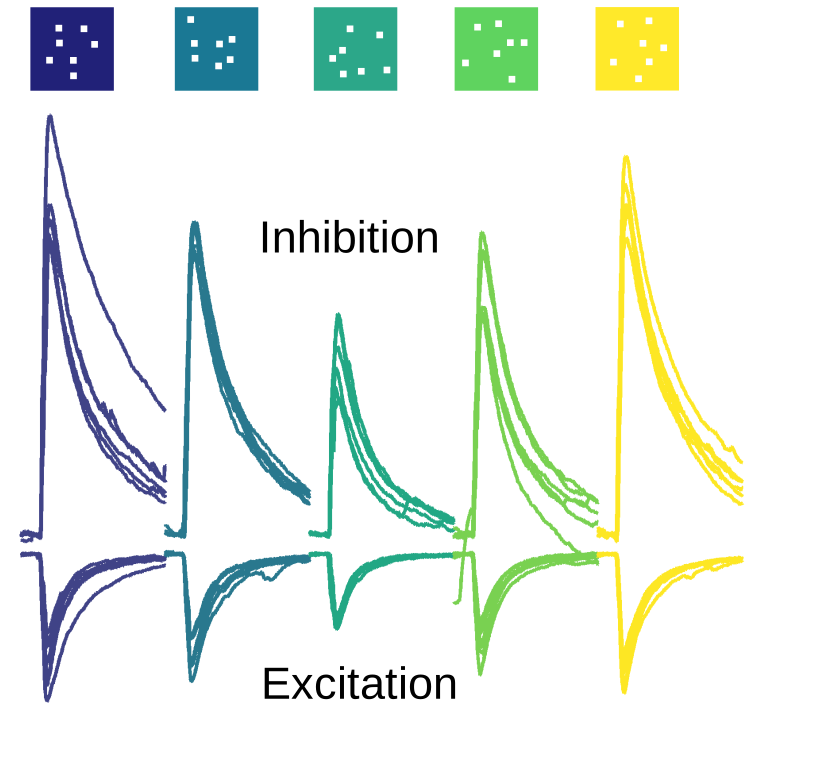
2012–2020 · Bhalla Lab, NCBS
Circuit and molecular substrates of memory
Precise excitation–inhibition balance in the hippocampus implements subthreshold gain control, and an exhaustive survey of small bistable chemical networks maps which motifs store a bit of memory robustly.