C. elegans has a complete connectome, molecularly identified neurons, a single-cell transcriptome, a neuropeptide–receptor map and whole-brain imaging. What it lacked was a place to hold all of that at once, so that a question about structure could be asked of function and back. CeDNe, pronounced "Sydney", is that place: a graph-based object model built on NetworkX in which neurons, connections and their molecular and functional annotations live together and can be analysed, simulated and fit.
What it holds
- Connectomes. White et al. 1986, Cook et al. 2019, the Witvliet et al. 2021 developmental series and the Brittin et al. 2021 contactome, hermaphrodite and male.
- Molecular identity. CeNGEN single-cell transcriptomes across stages, neurotransmitter identities, the Ripoll-Sánchez et al. 2023 neuropeptide connectome and Wang et al. 2024 ligand–receptor expression.
- Function. Randi et al. 2023 functional connectivity and Atanas et al. 2023 whole-brain imaging.
- Anatomy. WormAtlas neuron positions and lineage.
- Other nervous systems. The Drosophila larva (Winding et al. 2023), the adult fly (FlyWire), Platynereis and Pristionchus, so the same code runs across species.
What it does
- Integrates anatomical, transcriptomic, neurochemical and functional data into one graph.
- Finds structural motifs, computes paths and traces information flow between named neurons.
- Maps new data, such as RNA-seq or imaging, onto known connectomic structure.
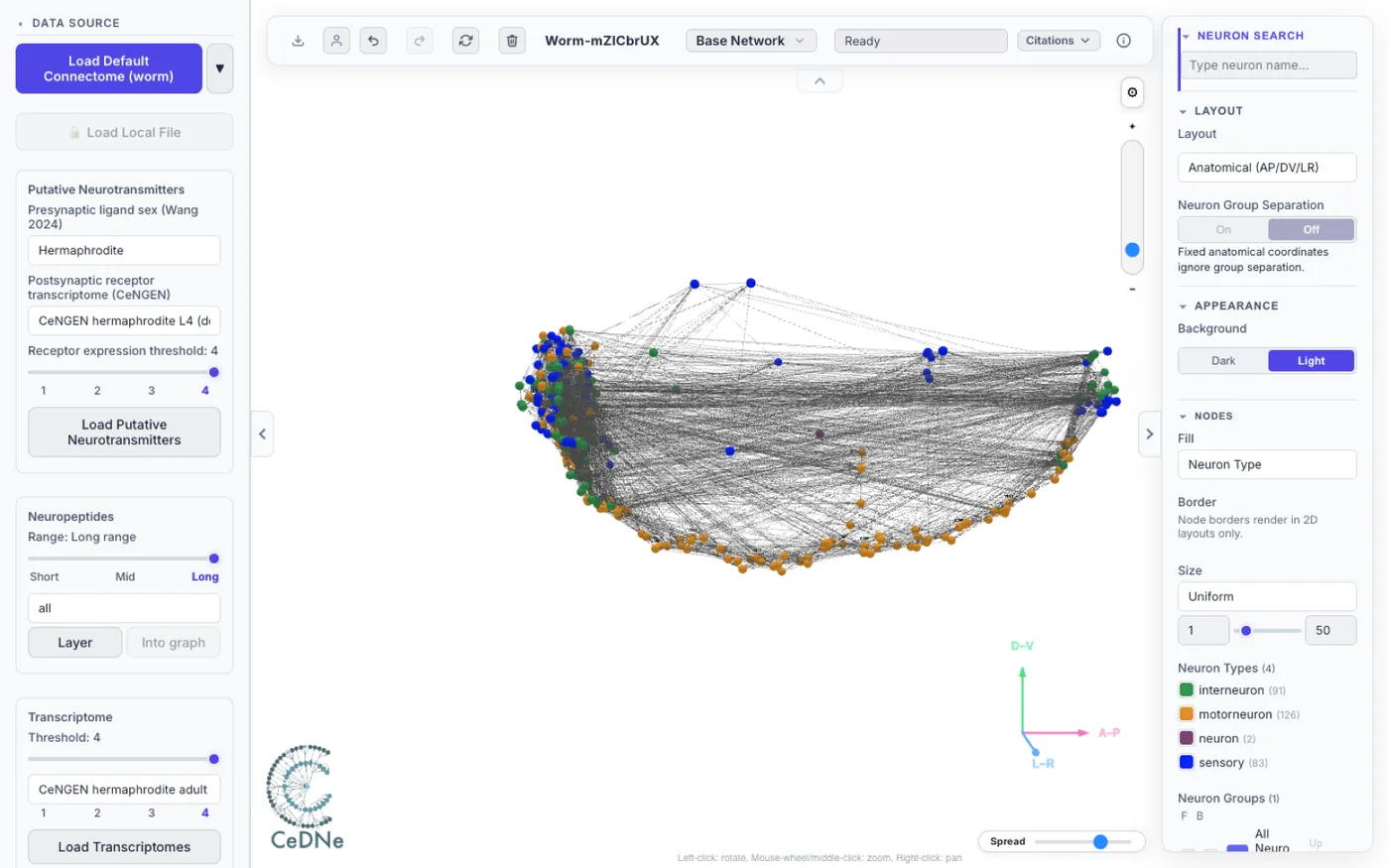
- Renders neuron-annotated 2D and 3D views with spatial alignment.
- Simulates neural activity on the wiring diagram and fits model parameters to recordings with Optuna.
- Ships thirty example notebooks, from loading a connectome to motif-based simulation and fitting.
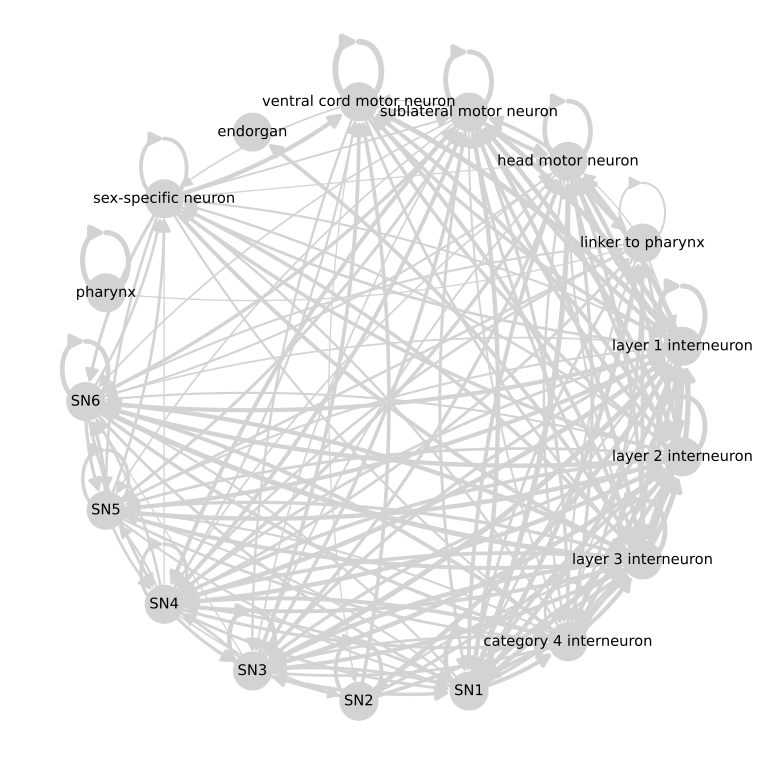
From motif to dynamics
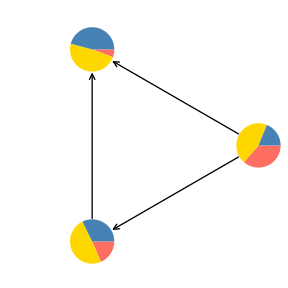
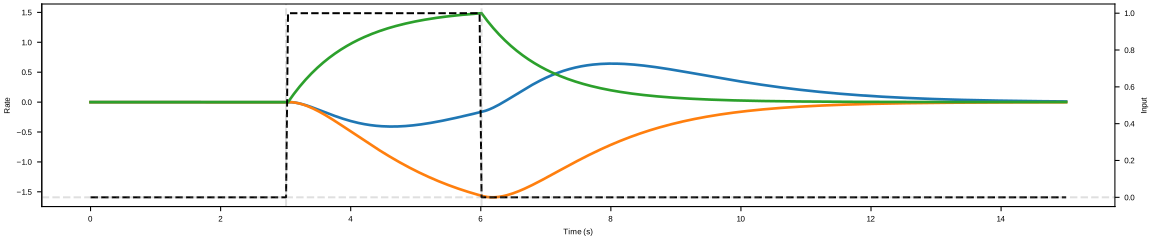
The step from structure to dynamics is the point of the framework. In the whole-brain learning project every analysis, from tensor decomposition to fitting linear dynamical systems per animal, ran inside CeDNe against the same named-neuron graph, which is what let a result about population geometry be turned into a prediction about three specific cells.
In the browser
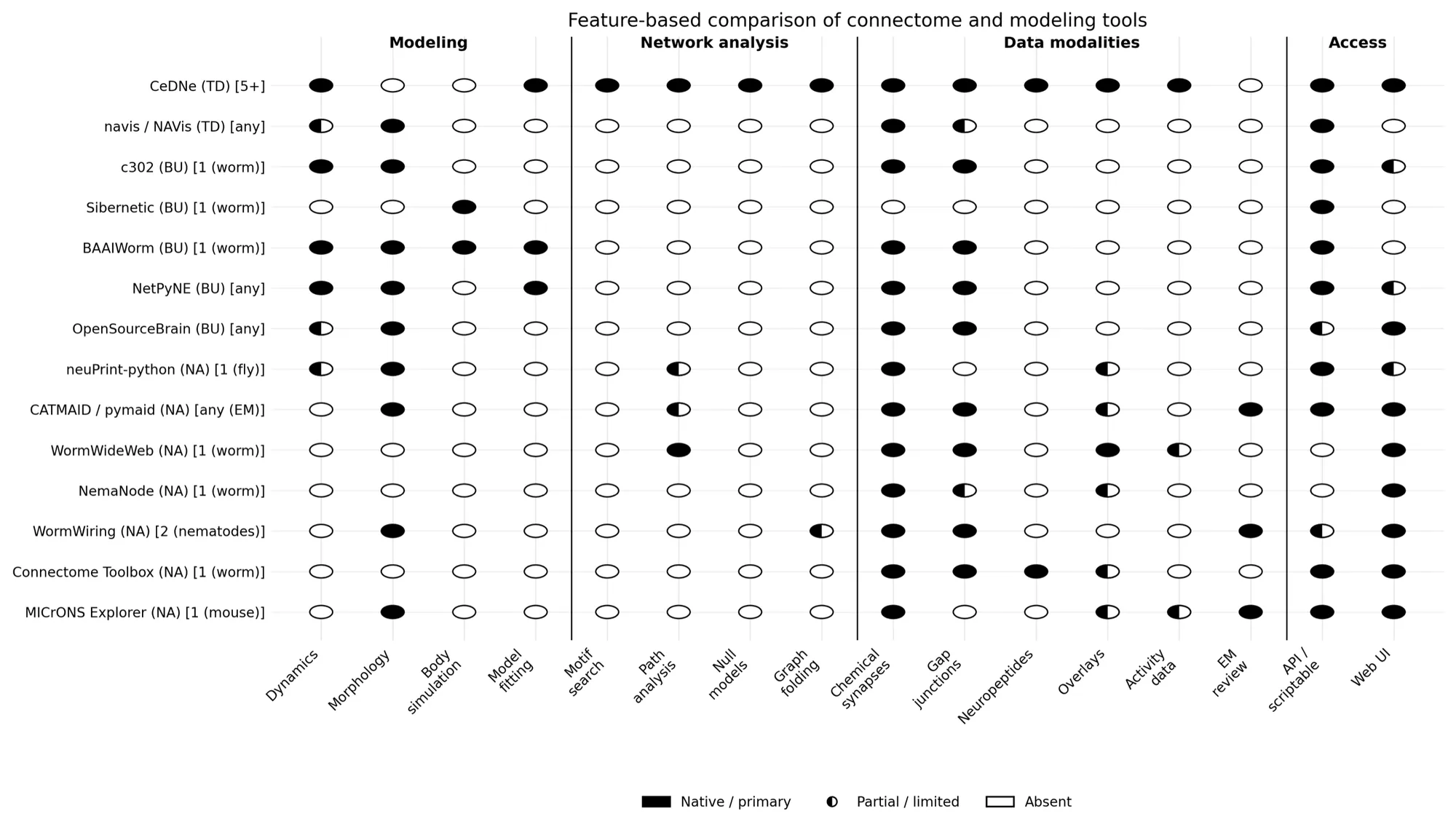
Compared with other tools
Use it
CeDNe is MIT-licensed. It needs Python 3.10 to 3.12 and installs with Poetry:
git clone https://github.com/sahilm89/CeDNe.git
cd CeDNe
poetry install
The documentation covers the object model and the example notebooks, which also run without installing anything on Binder. If you use CeDNe, please cite the preprint.