My PhD asked how memory could be physically robust at two very different scales: a feedforward microcircuit in the hippocampus, and reaction networks small enough to fit inside a dendritic spine.
Precise excitation–inhibition balance in the hippocampus
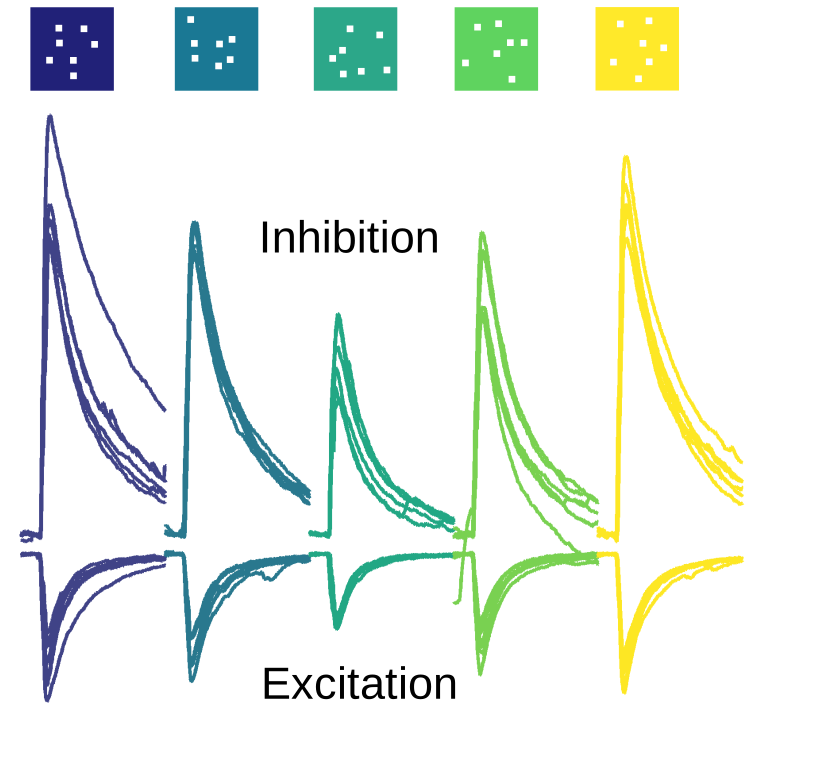
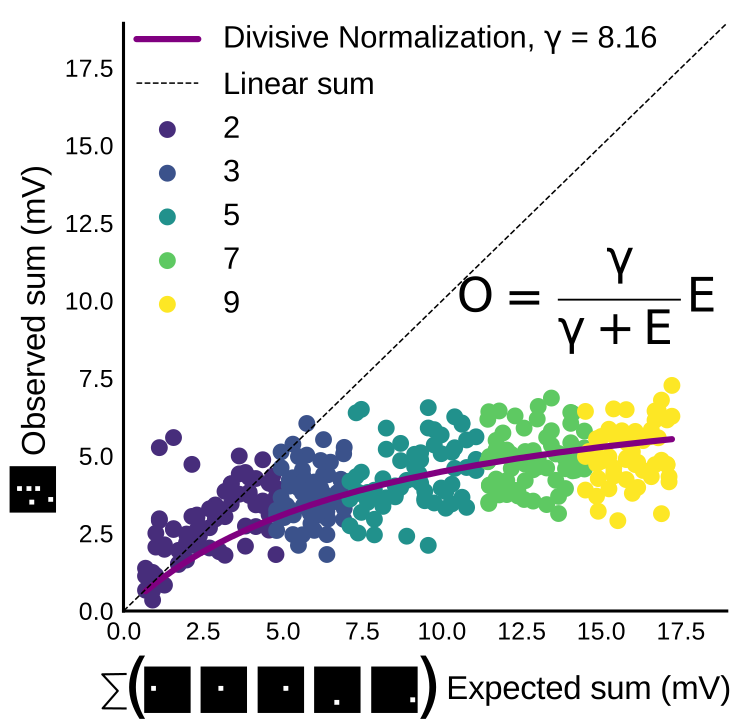
Neurons receive excitation (E) and inhibition (I) together, and theory had long argued that their balance shapes what a network can compute. Two positions were on the table: detailed balance, where every combination of presynaptic inputs is matched by inhibition, and tight balance, where E and I track each other on timescales faster than the membrane. With Aanchal Bhatia, I tested both directly. We projected random patterns of light onto CA3 with a digital micromirror device to activate arbitrary subsets of neurons, and recorded the resulting E and I in single CA1 cells.

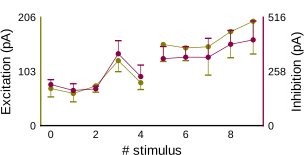
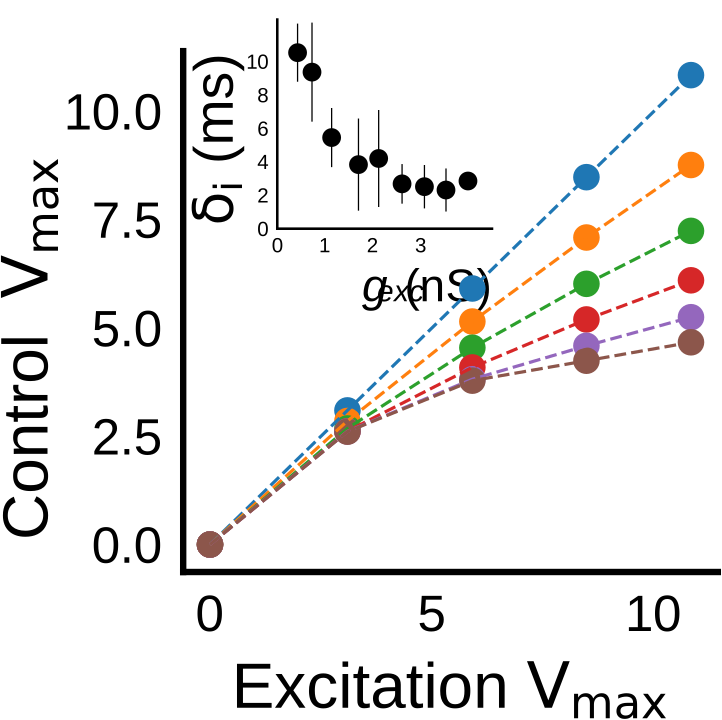
Balance turned out to be both detailed and tight, which we called precise. Inhibition followed excitation with a delay that shrank as the input grew. In a model, and then in the recordings, that input-dependent delay produced a computation we named subthreshold divisive normalization: the summed response is divided by a term that grows with input, so a wide range of input strengths is compressed into a small range of depolarization while the timing of the peak carries the amplitude information instead. The circuit converts how much into when.
Chemical switches that store a bit
At the other end of the scale, memory at a synapse is thought to be held by bistable biochemical networks, molecular flip-flops whose state is a concentration. I asked which network topologies do this robustly. Starting from the exhaustive enumeration of small networks by Ramakrishnan and Bhalla, I simulated all 3,561 bistable topologies with up to six reactions among three molecules or three among four, sampling roughly two thousand rate-parameter sets per network over six orders of magnitude with Latin hypercube sampling, about seven million models in total.

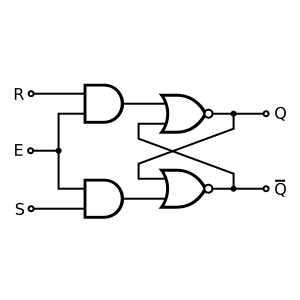
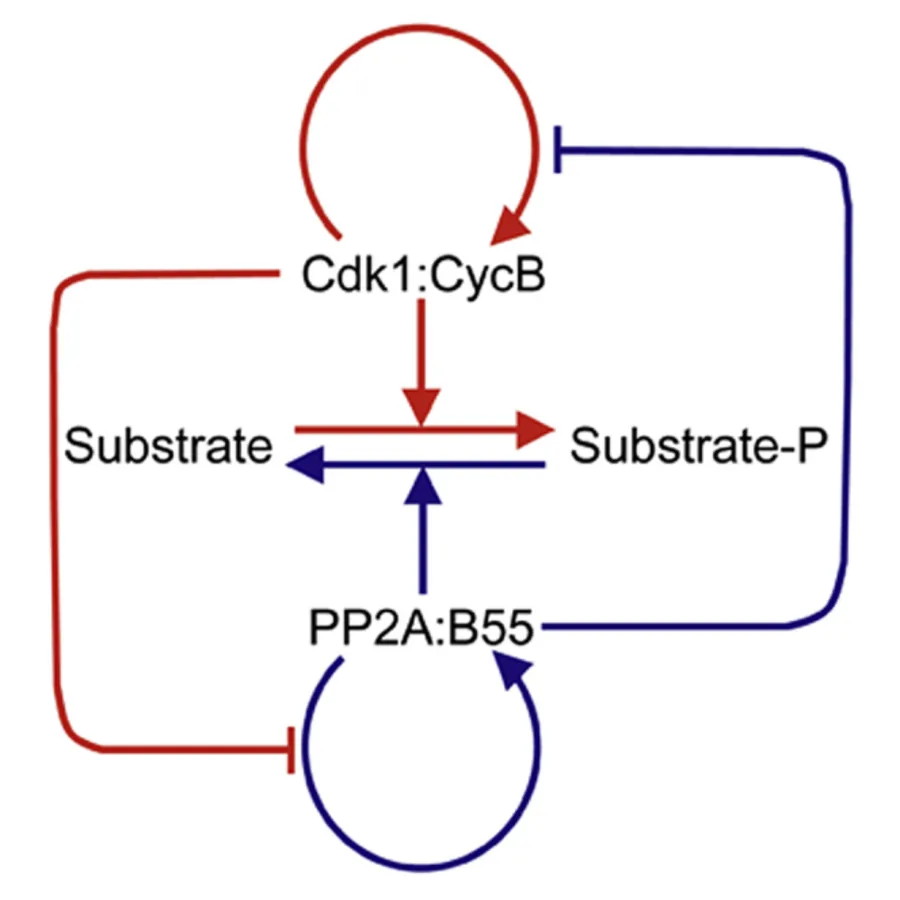
Three kinds of robustness matter for a molecular memory: to changes in reaction rates, to thermal noise in the tiny volumes of a spine, and to structural perturbations of the network itself. The main result was that these dimensions are nearly independent, so a network robust in one need not be robust in another, and that mirror-symmetric topologies tolerate rate perturbations best. Larger networks inherited robustness from the small bistable motifs embedded in them. The full catalogue, with parameters, is searchable at SWITCHES, which we built with G. V. HarshaRani.